
Manufacturers rely on inspection processes to ensure the quality of the products they build. However, manual visual inspection can be time-consuming, inconsistent, and difficult to scale in modern production facilities.
Automated optical inspection (AOI) technology provides a faster, more consistent approach to quality control. Through cameras, optics, and software, AOI systems help manufacturers identify defects, verify dimensions, and improve measurement consistency.
By reducing operator variability, improving measurement accuracy, and generating automated inspection reports, AOI has become an essential tool for quality control across a wide range of industries.
How AOI Systems Work
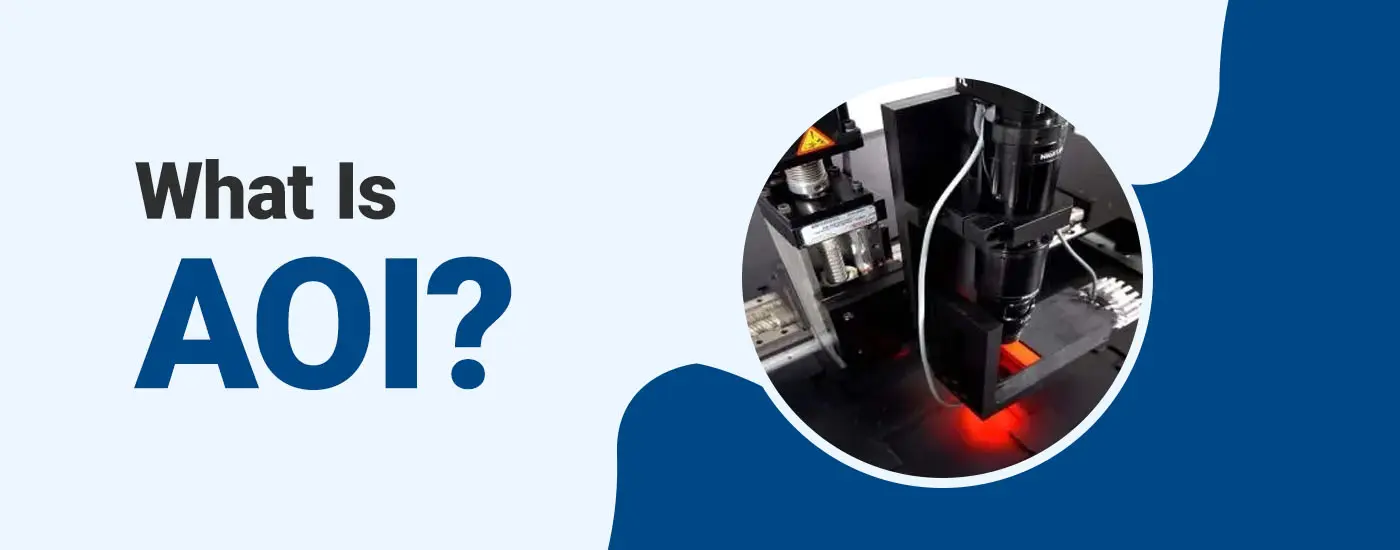
AOI systems rely on several components working together to accurately capture images and identify irregularities. Inspection accuracy depends on the image quality that an AOI system can produce.
Three key components make this possible:
- Light source: The light source illuminates products being inspected. Proper lighting helps cameras highlight features, detect small variations, and improve image contrast. Different applications use various types of light sources. However, most modern systems use LED arrays and halogen lamps. These provide consistent lighting for inspections.
- Lenses: AOI systems use premium-quality lenses to capture sharp images. The lens directs reflected light into the camera sensor. A lens system can be adjusted to change the depth and field of view, allowing inspection of different types and sizes of products.
- Camera: The digital camera captures the product’s image. AOI systems may use a standard 2D camera or a sensor that captures rotational images for a 360-degree view of the part.
Types and Configurations of AOI
Each manufacturer has different inspection needs. Production volume, inspection speed, part complexity, and quality requirements all affect how an AOI system is configured. Understanding the different AOI options can help you choose the right system for your operation.
AOI Configurations
Inline AOI
Inline AOI is a quality control process in which the AOI system is integrated into the manufacturing line, enabling real-time product inspections. With inline AOI, inspection times are limited. Evaluations must be completed as parts or components move through the production line.
Online AOI
Online AOI refers to inspection stations located within the manufacturing line but not directly integrated with it. Components are inspected as they move along the assembly line. However, the inspection process may or may not halt the line if a defect is found.
Online AOI systems are commonly used for inspecting randomly selected samples, which is ideal for high-speed production. Software like VisionGauge® OnLine provides additional tools and features to enhance online AOI effectiveness.
Offline AOI
Offline AOI systems inspect components and products outside the production line. This approach allows goods to be inspected in a separate, controlled environment. Choosing an offline AOI system often means slower output. However, it does enable more detailed inspections without strict time limits. Offline AOI is commonly used in industries where complex parts require detailed inspection and documentation, such as aerospace, medical device manufacturing, automotive, and others.
AOI Types
2D AOI
Two-dimensional AOI is most commonly used. These systems utilize 2D cameras to take photos of items for inspection. They are particularly effective for identifying surface-level quality issues, such as incorrect or missing components, misalignments, and soldering defects.
3D AOI
Three-dimensional AOI systems are a more advanced version of this technology. These systems use sensors to create topographical maps and 360-degree views of inspected parts. By capturing height and depth information, 3D AOI can evaluate complex geometries and identify variations that may be difficult to detect with 2D imaging alone.
Benefits of AOI
Building an automated AOI system into a manufacturing line affords an operation numerous advantages:
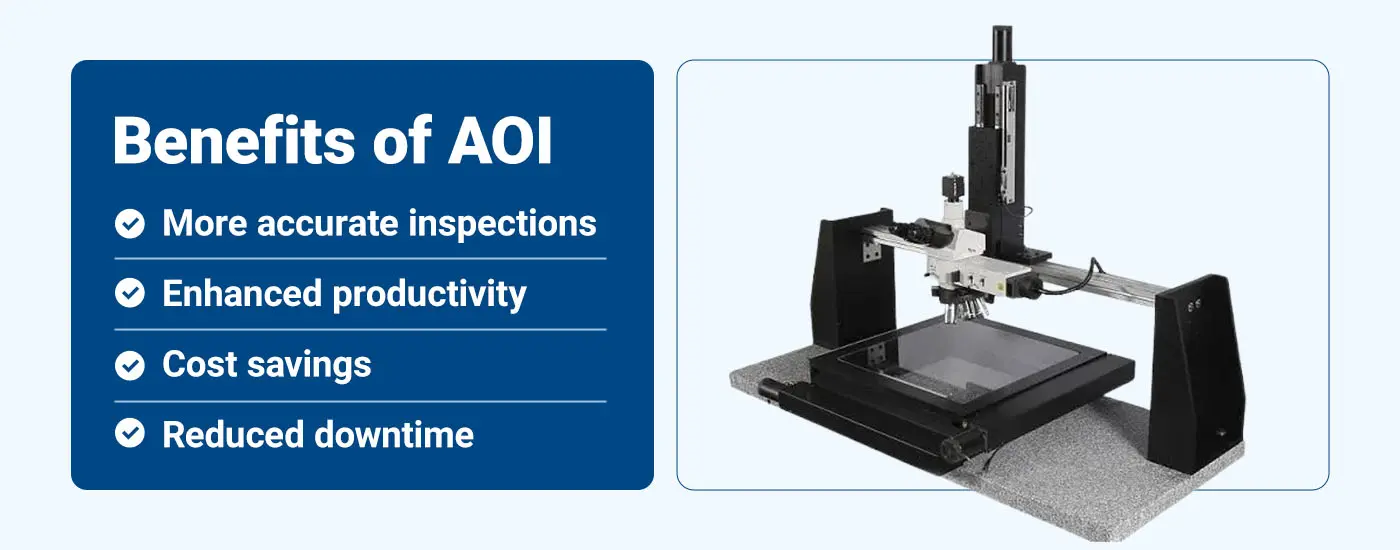
- More accurate inspections: Because AOI provides detailed images and scans of components, these systems can identify small defects or deviations from production standards. This technology can perform ultraprecise measurements to confirm dimensional accuracy.
- Enhanced productivity: These machines operate at high speeds, completing thousands of inspections per hour. AOI systems are valuable tools for high-volume manufacturing facilities.
- Cost savings: Manufacturers can reduce production costs by detecting defects early, helping reduce losses from recalls or material waste. Using AOI equipment can also help reduce customer complaints about defective goods.
- Reduced downtime: Utilizing an AOI system can significantly reduce overall production time, especially when replacing manual inspection as the primary quality control method. Eliminating a potential bottleneck in quality assurance allows manufacturers to accelerate the flow of products to market.
Factors to Consider Before Implementing AOI
While AOI systems provide a lot of value, manufacturers do need to be aware of a few factors before they make the initial investment in this technology:
- Setup and Programming Requirements: Setting up and programming an AOI system can be complex and often requires specialized training. Because of the steep learning curve, it could be extremely challenging for a layperson to install and program this technology correctly.
- Product and Process Changes: AOI systems work best when processes are consistent. AOI is far less effective in situations with rapid product changes, as variations in inspected parts can make it difficult to correctly identify defects. An AOI system generally must know exactly what it is working with and what it is looking for at all times.
- Programming and Maintenance Demands: AOI equipment must be programmed on-site, and unless the programming is transferable, it can only be done on one machine at a time. In larger setups, this could cause major delays, especially when frequent changes are required.
- Inspection Criteria: While AOI equipment can detect a wide range of defects, it can only identify those it is instructed to find, such as dimensional errors or a flawed surface finish. As a result, unexpected issues may not be detected.
With these considerations in mind, AOI system technology is best suited for established manufacturing processes where inspection requirements are well defined and quality standards must be applied consistently.
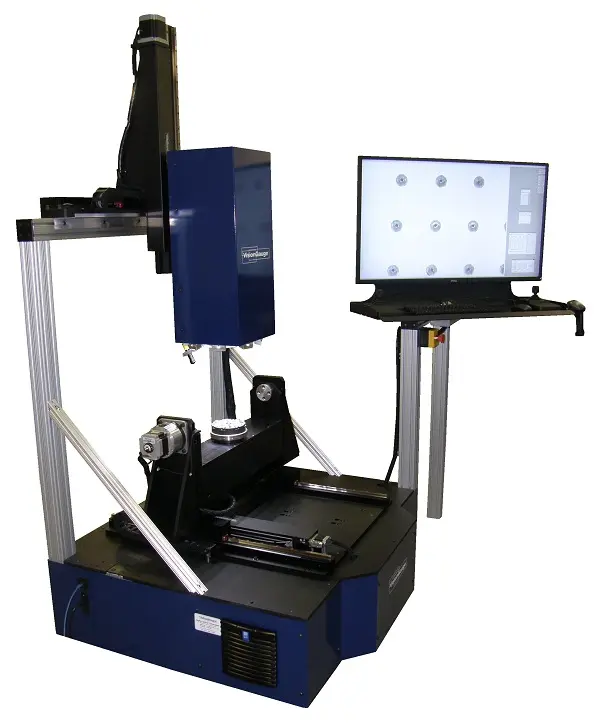
Many modern inspection technologies address these common AOI implementation challenges while improving inspection efficiency. Advanced systems such as VisionGauge® Digital Optical Comparators incorporate automation, measurement, reporting, and CAD-based analysis tools for high-accuracy inspection and quality control applications.
How to Integrate an AOI System Into a Production Line
Integrating an AOI system into a manufacturing process involves several key steps:
- Assess system requirements: Understanding your production line’s requirements is important. Consider which defect detection methods are necessary and the desired inspection accuracy.
- Select the right AOI system: Ensure it aligns with the intended production line. Consider whether you need 2D or 3D inspections and the required inspection speed.
- Prepare the production line: Review the workflow and set up appropriate conveyor systems or interfaces to keep products moving seamlessly through the inspection station.
- Employee training: Provide training to employees and operators to ensure they know how to maintain the AOI system. You’ll also need to train personnel to interpret and respond to inspection results.
Industries That Rely on Automated Optical Inspection
Automation is revolutionizing many industries, from retail and transportation to electronics and medicine. Below are merely a few of the many industries that benefit from automated optical inspection technology.
Aerospace
The aerospace industry demands parts that deliver optimal performance and maximum safety. As such, manufacturers must meet strict requirements and tight tolerances. Automated Optical Inspection helps identify dimensional variations, defects, and surface issues that could affect part performance and safety. By reducing reliance on manual inspection, AOI supports quality control processes and improves inspection consistency for turbine blades and other precision-engineered components.
Medical Manufacturing
Since the parts fabricated in the medical manufacturing industry must integrate seamlessly with the human body, component precision and functionality is critical. AOI systems help validate that bone screws, orthopedic implants, stents, and other medical equipment meet rigorous regulatory standards.
Automotive
The automotive industry depends on consistent quality across a variety of integral parts. Even small dimensional variations or manufacturing inconsistencies can impact performance, reliability, and safety. AOI systems inspect automotive parts for dimensional accuracy, assembly errors, and other quality issues.
Packaging
The packaging industry relies on product consistency while meeting demanding production schedules. Errors such as incorrect labels, seal defects, damaged packaging, or missing components can impact profitability and customer satisfaction. AOI systems verify packaging integrity and identify production inconsistencies to support quality control requirements.
Trust VisionGauge® AOI Systems to Fulfill Your Production’s Needs
VisionGauge® AOI systems are designed to support a wide range of production requirements. VisionGauge® machines provide you with a variety of manual or fully automatic inspections, precise part measurements, and excellent quality control. We back our systems with exemplary application support. Our team develops powerful, intuitive technology for manufacturers across many industries.
Contact us to learn more about the AOI systems and digital optical comparators we offer, or explore our inspection and measurement solutions today.
Popular Posts